
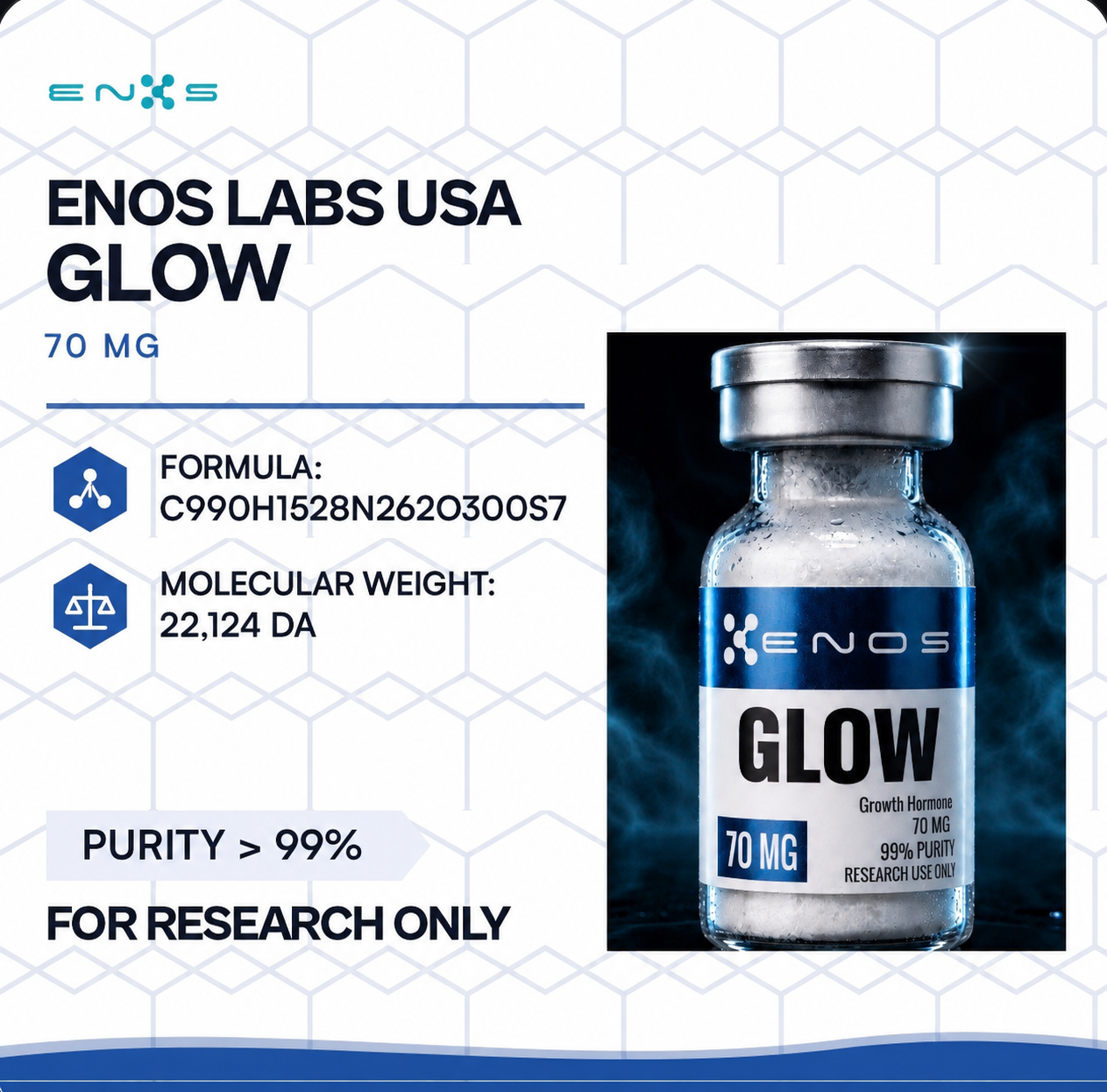
GLOW 70MG
Recovery / Skin & Beauty
Three-peptide research blend in a single lyophilized vial
About this compound
GLOW is a 70MG multi-component research blend combining BPC-157 (10MG), TB-500 (10MG) and GHK-Cu (50MG) in one lyophilized vial. It is intended for in-vitro and preclinical laboratory work where several signaling pathways are studied in parallel from a single reconstitution.
Specifications
- Total mass per vial
- 70 MG lyophilized
- Composition
- BPC-157 10MG + TB-500 10MG + GHK-Cu 50MG
- Form
- Sterile lyophilized powder
- Planned retail
- $105.00 per vial
- Testing
- Third-party HPLC and mass spectrometry per lot
- Status
- Coming soon — not yet available to order
Research scope
- Multi-pathway study designs that would otherwise require three separate vials and three reconstitutions.
- BPC-157 is a synthetic pentadecapeptide studied in the literature for angiogenic and cytoprotective signaling in laboratory models.
- TB-500 is a synthetic fragment related to thymosin beta-4, studied for actin-binding and cell-migration pathways in vitro.
- GHK-Cu is a naturally occurring copper-binding tripeptide studied for extracellular-matrix and fibroblast gene-expression research.
Descriptions above summarize published laboratory research on these molecules. They are not claims about outcomes in humans or animals and are not evidence of any effect.
Handling & storage
- Reconstitute with bacteriostatic water; keep the blend ratio in mind when calculating per-component concentration.
- Store the sealed lyophilized vial refrigerated and protected from light.
- Copper-containing peptides can interact with some buffers — verify compatibility for your assay.
From the ENOS Research Library
Each released lot ships with a certificate of analysis from an independent laboratory — HPLC purity and mass-spectrometry identity, tied to the lot number on the vial.
These products are sold strictly for in-vitro laboratory research and are not intended for human consumption, diagnosis, treatment, or any therapeutic use. Purchaser must be 18 years of age or older and confirms they are a qualified researcher.